
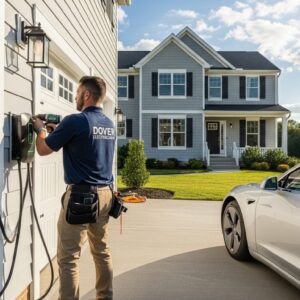
With the rise of electric vehicles, more homeowners in Dover are installing chargers at home. While having a Level 2 EV charger brings convenience and faster charging, it’s not uncommon to face some challenges after installation. Understanding these issues, and knowing when to call a professional, is key to keeping your EV charging system safe and reliable.
This guide walks homeowners through common post-installation problems, practical troubleshooting steps, and tips to maintain your residential EV charging solutions in Dover.
Why My EV Charger Won’t Start Charging
One of the most common issues after installation is that the home EV charger doesn’t start:
- Power supply issues: Check that the dedicated circuit breaker is on and that power is reaching the charger.
- Connection errors: Ensure the charging cable is properly connected to the EV.
- Safety precautions: Never attempt to troubleshoot live wires without proper knowledge; always consider calling a Level 2 EV charger installer in Dover if unsure.
Sometimes the problem is minor, like a tripped breaker, but it could also indicate faulty wiring or installation errors that require professional attention.
Charger Shows Error Codes: What Do They Mean?
Modern chargers display error codes to alert you to problems:
- Common errors: Overcurrent, temperature warnings, or connectivity failures.
- Resetting the charger: Most units have a reset button or procedure outlined in the manual.
- When to call a professional: Persistent or unclear error codes should be addressed by a licensed technician to avoid risks.
Professional car charging installation services in Dover ensure error codes are resolved safely and that your charger operates reliably.
Slow Charging or Reduced Power
A slow-charging EV can be frustrating, especially if you rely on home charging daily:
- Circuit limitations: Older electrical panels may not support full Level 2 power.
- Charger compatibility: Ensure your charger and vehicle are compatible for optimal charging speed.
- Cable or connector issues: Inspect for frayed cables or loose connections that may reduce power delivery.
A Level 2 EV charger installer can test and optimize your system, ensuring you get consistent, efficient charging every time.
Power Surges or Trips During Charging
Power surges or repeated breaker trips are warning signs that shouldn’t be ignored:
- Overloaded circuits: Too many devices or high-power appliances on the same circuit can trigger trips.
- Faulty wiring: Improper or damaged wiring can cause instability in your home’s electrical system.
- Professional resolution: A home EV charger installation in Dover by licensed electricians includes proper circuit setup to prevent recurring trips.
Ensuring correct wiring and breaker sizing is critical to the safety and longevity of your residential EV charging solutions.
Connectivity and Smart Charger Problems
Many modern chargers have smart features for scheduling and monitoring:
- Wi-Fi or app issues: Interference or weak signals can disrupt connectivity.
- Firmware updates: Keep your charger updated to ensure features work correctly.
- Integration with home energy systems: Multiple chargers or solar setups may require professional configuration.
A qualified EV charger installer in Dover can troubleshoot and configure smart systems for seamless daily use.
Signs Your Installation May Be Improper
Even a recently installed charger can have issues if the installation wasn’t done correctly:
- Loose connections: Check the mounting bracket and cable connection points.
- Improper circuit setup: Ensure a dedicated line from the breaker panel.
- Incorrect location: Chargers need proper clearance and protection from moisture.
If you notice any of these signs, contact a licensed professional for inspection and correction. Proper installation protects your vehicle and home.
Preventative Tips to Avoid Future Charger Problems
Preventative maintenance reduces frustration and keeps your system safe:
- Schedule regular inspections: Check connections, outlets, and panel integrity.
- Safe charging habits: Avoid using extension cords or sharing circuits with heavy appliances.
- Panel upgrades if needed: Ensures your system can handle future EVs or additional chargers.
These steps maximize the longevity of your residential EV charging solutions and prevent common post-installation problems.
Avoid charging frustrations—call LR Electrical for professional home EV charger installation in Dover. Our experienced Level 2 EV charger installers ensure your system runs smoothly and safely.
When to Call a Professional EV Charger Installer in Dover
Some issues are beyond simple troubleshooting and require expert help:
- Persistent error codes or slow charging after all checks.
- Frequent breaker trips despite proper usage.
- Installation that may not meet electrical code requirements.
Hiring an expert EV charger installer guarantees proper inspection, safe wiring, and full compliance with safety standards, protecting your home and EV.
Next Steps for a Safe and Reliable EV Charging System

- Schedule a professional home EV charger installation in Dover with a licensed installer.
- Perform routine inspections and maintenance to prevent issues.
- Upgrade circuits or panels if your home requires it for consistent charging.
Frequently Asked Questions
- Why does my charger stop mid-charge?
Often caused by circuit overload, power interruptions, or charger firmware issues. A professional inspection ensures reliable operation. - Can weather affect my home EV charger?
Yes. Outdoor chargers need weatherproof ratings; improper installation can expose wiring to moisture and damage. - How do I know if my EV charger is damaged?
Signs include sparking, unusual noises, slow charging, or error codes. Avoid using a damaged charger and call a licensed installer. - What maintenance is recommended for my charger?
Check connections, keep the unit clean, and ensure firmware is up to date. Annual inspections are recommended. - Can multiple EVs share one charger safely?
Yes, if the charger and electrical system are designed for multiple vehicles. A Level 2 EV charger installer can configure systems safely.